
Every cat acts in its own way. Some cats run to the door when you come home. Others stay in a quiet place and watch. One cat may love being held, while another may like sitting next to you. These are simple signs of cat personality. Learning about cat personalities can help cat parents understand their pets better. A cat’s breed, age, early life, health, and home environment can all affect how it behaves. Coat color may be linked to some common beliefs, but it does not tell you exactly how a cat will act.
At Cat House, we believe that noticing these small signs can help cats and people build a stronger bond. Cat personality is the mix of habits, likes, dislikes, and reactions that makes each cat unique. A cat may be calm, bold, shy, playful, friendly, independent, or active. Common cat personality traits include curiosity, playfulness, confidence, affection, caution, sociability, and independence. A cat can show several traits at the same time. For example, a playful cat may feel shy around strangers, while a social cat may still enjoy quiet time alone. This is why feline personality traits should not be placed into one strict group. Every cat is different, and its personality can develop and change over time.
Common Cat Personality Types
There is no single list of official cat personality types. Still, cat parents often notice a few common patterns.
Shop the collection
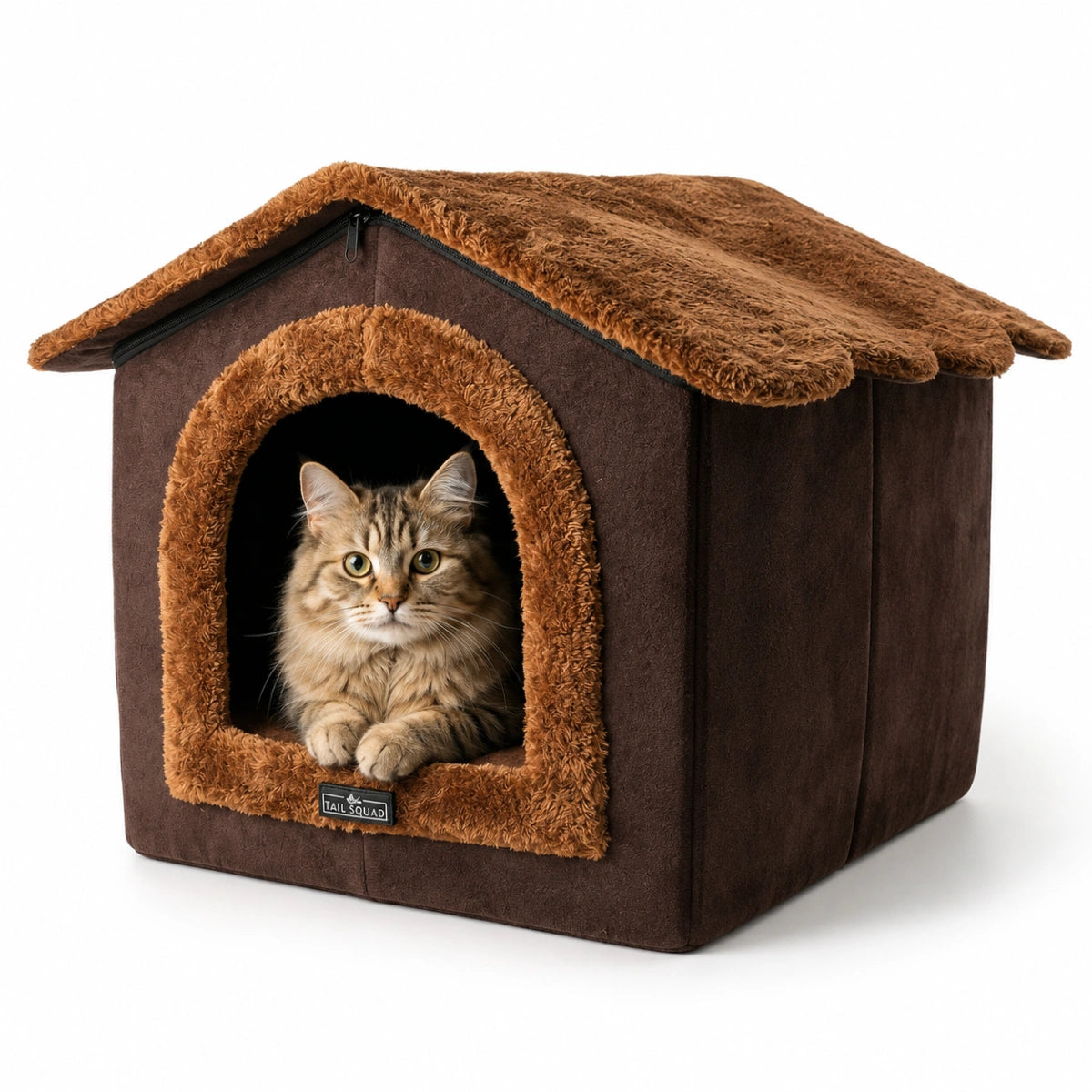

A social cat enjoys being near people. It may follow family members from room to room. It may also ask for attention.
An independent cat likes people but does not need constant contact. A playful cat loves toys, chasing, climbing, and games. It may need more daily activity than a calm cat.
A shy cat needs more time to get used to new people. It may hide when guests come over. With care and time it may feel relaxed. A bold cat is always curious about new places, sounds and things.
These personality traits of cats can change with age and experience. A kitten may be very active at first. It may become calmer as it grows.
Cat Personality and Daily Lifestyle
Cat behavior and personality are closely linked to daily life.
Cats need food, water, rest, play, safe spaces, and mental activity. They also need chances to follow natural habits.
Common cat behaviors include sleeping, grooming, scratching, eating, playing, watching, exploring, and hunting through play.
Indoor cats may have fewer chances to explore. Good cat enrichment can help. Scratching posts, toys, climbing areas, puzzle feeders, and window spaces can add activity to the day.
Cat mental stimulation is important too. A bored cat may become restless. It may scratch furniture, knock things over, or demand attention.
A simple daily routine can help cats feel safe. Regular meals, play time, rest, and interaction can make life easier.
Cat Body Language and Communication
Cats use their body to communicate. Their ears, eyes, tail, face, and posture can all give clues.
A relaxed cat may have soft eyes and a loose body. Its tail may rest in a natural position.
A scared cat may crouch down. It may flatten its ears or puff up its tail.
A cat that wants space may hiss, growl, or move away. These signs should be respected.
Cat body language and behavior should always be viewed together. One sign does not tell the whole story.
Cats also use sounds. Meows, purrs, chirps, and other forms of cat vocalization can have different meanings.
Learning how cats communicate can help cat parents notice what their pets need.
Personality of Cat Breeds
Breed can affect typical behavior. However, breed does not decide the full personality of a cat.
Two cats from the same breed may act very differently. Their genes, early life, socialization, and home can all play a part.
- Bengal Cat Personality
The Bengal cat personality is often active and curious. Bengal cats may enjoy climbing, chasing, and exploring.
Bengal cats traits often include high energy and a strong need for play. A Bengal kitten personality can be very lively.
- Siamese Cat Personality
Siamese cat personality is often social and active. Siamese cats may enjoy spending a lot of time with people.
They are also known for being vocal. Siamese cat personality traits may include curiosity, attachment, and a strong need for interaction.
A Siamese kitten may be very playful. Its Siamese kitten personality can change as it matures.
- Maine Coon Personality
The Maine Coon cat personality is often described as friendly and gentle. Many are social without needing constant attention.
Their large size does not mean they need a different type of care in every area. Their activity level still depends on the individual cat.
Maine Coon traits include curiosity, playfulness, and a calm nature.
- British Shorthair Personality
The British Shorthair cat personality is often calm and steady. Many enjoy being near people without asking for attention all the time.
British Shorthair personality can vary between individual cats. The British Blue is simply a common blue-gray color of this breed.
- Abyssinian Personality
An Abyssinian cat personality is often active and curious. These cats may enjoy climbing, movement, and interactive play.
Abyssinian cat personality traits suit home as they give a lot of activities.
- Ragdoll Personality
Ragdoll cat personality is often gentle and social. Many enjoy spending time near their people.
Some Ragdolls like being held. Others prefer to stay beside a person instead.
Their Ragdoll cat character can still vary from one cat to another.
- Russian Blue Personality
The Russian Blue cat personality can be calm and reserved with new people. Many become more affectionate with people they trust.
The personality of a Russian Blue cat may include alertness, quiet behavior, and a strong bond with familiar people.
- Persian Cat Personality
Persian cat personality is often quiet and gentle. Many prefer a calm home and a regular routine.
Persian cats may not need the same level of activity as some highly active breeds. They still need daily play and care.
Other Breed Personalities
Many other breeds have their own common traits.
Birman cat personality is often gentle and social. Norwegian Forest Cat personality may include confidence and curiosity. Siberian cat personality can be playful and adaptable.
Bombay cat personality is often described as affectionate and people-focused. Sphynx cat personality can be social, active, and attention-seeking.
These patterns are useful guides. They should never replace looking at the individual cat.
Cat Color and Personality
Many people wonder about cat color and personality.
You may hear that black cats are calm. Orange cats are friendly. Tuxedo cats are playful. Calico cats have strong personalities.
These ideas are common, but they are not rules.
Black cat personality may be described in many ways. The same is true for orange cat personality, white cat personality, and gray cat personality.
Some people also ask about orange tabby cat personality or grey tabby cat personality. These cats may have different temperaments within the same color group.
A tuxedo cat personality can be social, shy, playful, or calm. A tuxedo pattern does not decide character.
The same applies to tortoiseshell cat personality and calico cat personality. Some cat parents use the word “tortitude” for certain tortie behaviors. However, this is a popular term, not a scientific personality type.
So, when looking at cat colours and personality, it is better to focus on the individual cat.
Male vs Female Cats Personality
People often compare male vs female cats personality.
Some behavior may be linked to hormones. For example, unneutered males may be more likely to roam or mark territory.
A male cat can be gentle and quiet. A female cat can be bold and playful. The opposite can also be true.
Early life, genetics, socialization, health, and home life can have a much bigger effect on an individual cat.
Do Cats Have a Favorite Person?
Many cat parents ask, do cats have a favorite person?
Some cats do seem to form a stronger bond with one person. A cat may choose the person who feeds it, plays with it, or gives it space when needed.
Cats may also prefer people who understand their signals.
Signs your cat trusts you can include sitting near you, resting beside you, slow blinking, rubbing against you, and staying relaxed around you.
Signs your cat likes you may include following you, greeting you, asking for play, or choosing to sleep near you.
Cats can also form strong bonds with several people. A favorite person does not mean other family members are ignored.
Cat Personality Changes With Age
- Kitten personality can be full of energy. Kittens often spend a lot of time playing, exploring, and learning. Their kitten behavior is shaped by early experiences. Safe handling and good socialization can help them become confident adults.
- Adult cat personality is often more stable. Adult cats usually have clear likes and dislikes.
- Senior cat behavior may change as a cat gets older. Older cats may sleep more and play less.
A sudden change should not always be blamed on age. Pain or illness can also cause changes in behavior. A veterinarian should check major or sudden changes.
Cat Behavior Problems
A bad habit does not mean a cat has a bad personality. Scratching is normal for cats. They scratch to stretch, leave their mark, and keep their claws healthy. Hiding is normal too. A cat may hide when it is scared, worried, or wants to rest.
Cat territorial behavior may lead to marking or conflict between cats.
Stress can also affect behavior. Cat stress behavior may include hiding, changes in eating, less grooming, or unusual vocal sounds.
Cat anxiety behavior can be more serious if it lasts for a long time. Cat aggression can also have many causes, including fear, pain, stress, or overstimulation.
If behavior changes suddenly, speak with a veterinarian. A health problem can sometimes look like a personality change.
Can You Test a Cat’s Personality?
A cat personality test or cat personality quiz can be fun. It may help you think about your cat’s habits.
However, an online quiz cannot fully measure a cat’s personality. The best approach is to watch your cat over time.
Notice how it reacts to people, other animals, toys, food, handling, noise, and changes at home.
This gives a clearer picture of your cat’s real needs.
Cat Person vs Dog Person
The idea of cat person vs dog person is mostly about personal preference.
Some people enjoy the quiet and independent nature often linked with cats. Others like the active and social lifestyle often linked with dogs.
These are only broad ideas. People can love both cats and dogs. The right pet depends on a person’s lifestyle, time, home, and expectations.
How to Support a Healthy Cat Personality
Give your cat fresh water, good food, a safe place to rest and a clean litter box. Let your cat come to you. Do not force hugs or handling. Give shy cats time to feel safe and explore.
Use toys to support natural cat hunting behavior. Short play sessions can provide exercise and mental activity.
Give indoor cats places to climb, hide, scratch, and watch the world.
Watch for changes in cat habits and daily behavior. Small changes can tell you that something is wrong.
FAQs
1. What are the most common cat personality traits?
Common cat personality traits include curiosity, playfulness, independence, confidence, affection, caution, and friendliness. A cat can have more than one trait. Its personality may also change as it grows and has new experiences.
2. Does cat color affect personality?
There is no strong rule that coat color determines personality. Cat color and personality are often linked in popular beliefs, such as orange cats being friendly or black cats being calm. However, each cat is different, so behavior should be judged by the individual cat rather than its color.
3. Do cats have a favorite person?
Yes, some cats may like one person more than others. A cat may like someone who feeds it, plays with it, and takes care of it. You may notice your cat follows this person, sits near them, rubs against them, or stays calm around them.
4. Can a cat’s personality change with age?
Yes. Cat personality changes with age are common. Kittens are often active and curious, while adult cats may have more settled habits. Senior cats may sleep more and become less active. If your cat’s behavior suddenly changes, talk to a vet.
5. Are male and female cats different in personality?
There can be some behavior differences, especially in cats that have not been neutered or spayed. However, male vs female cats personality is not a simple comparison. Individual genetics, early experiences, socialization, health, and home life can have a much greater effect.
6. How can I understand my cat’s personality?
Watch your cat’s daily habits and cat body language. Notice how it reacts to people, other animals, new places, toys, handling, and sounds. Learning how your cat communicates can help you understand its needs and recognize changes in normal behavior.
Final Thoughts
Every cat has a unique cat character. Breed, genes, age, color, health, socialization, and home life can all play a part.
There is no single answer for the characteristics of cats personality. A breed guide can show common traits, but it cannot predict every cat.
By learning cat behavior, body language, communication, and daily habits, cat parents can understand their pets better.
At Cat House, we believe that knowing your cat’s personality is one of the best ways to build a stronger and happier bond.