
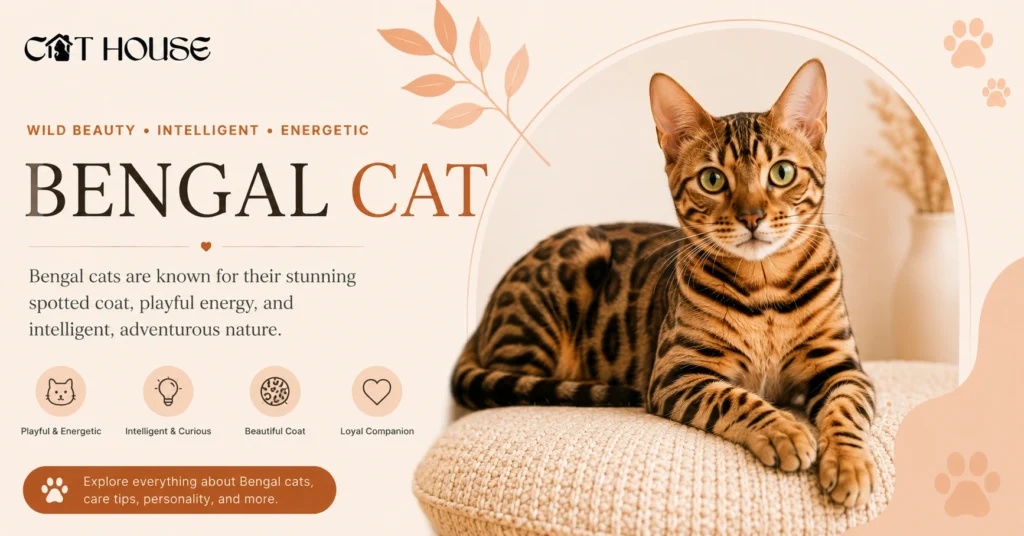
Bengal cats are the most unique and attractive domestic cat breeds who are admired for their wild-looking coat, strong build, and energetic personality. This breed has the appearance of a small leopard but enjoys the companionship of a loving family pet. If you are searching for Bengal cat kittens, exploring the Bengal cat price, or want to understand more about this breed, this guide covers its history, characteristics, care, and personality.
The Bengal cat was originally developed by crossing domestic cats with the bengal leopard cat. The breed got popular for its beautiful spotted coat and intelligent nature.
Bengal Cat History and Origin
The Bengal cat history began during the 1960s when breeders wanted to create a domestic cat that had the appearance of a wild leopard but the temperament of a companion animal.
Shop the collection

The breed was developed using the Bengal leopard cat (Prionailurus bengalensis) and carefully selected domestic cats. Through responsible breeding over several generations, the modern Bengal became fully domesticated while keeping its distinctive spotted or marbled coat.
Today, the Bengal cat origin is recognised in the United States, and the breed is accepted by major cat registries across the world.
Although people sometimes refer to them as a royal Bengal cat or Bengal tiger cat, these are simply popular names rather than separate breeds.
Bengal Cat Size
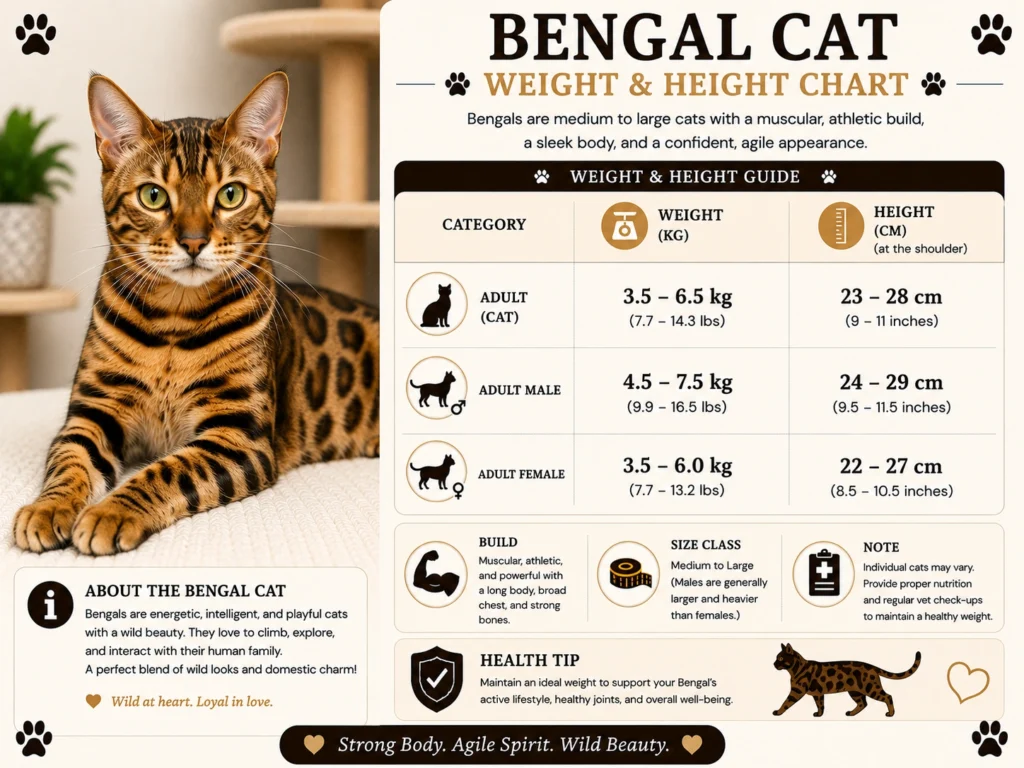
The Bengal cat size is larger than many common domestic cats. Their athletic build, muscular body, and long legs give them a powerful appearance without making them overweight.
Adult males are generally larger than females.
- Male weight: 4.5–7.5 kg
- Female weight: 3.5–6 kg
- Height: 22–29 cm
- Body: Long, lean, muscular
A full grown Bengal cat reaches its adult size between 18 months and 2 years of age.
Some people search for a big Bengal cat, large Bengal cat, or even the largest Bengal cat. While Bengals are naturally athletic and bigger than average cats, healthy breeding is far more important than extreme size.
Bengal Cat Personality
The Bengal is known for its energy and intelligence. They like to enjoy climbing and staying active by playing puzzle toys, cat trees, and interactive games to stay engaged.
Their personality traits has:
- Highly intelligent
- Curious and adventurous
- Loyal to family
- Confident
- Playful
- Social with proper training
Many owners even teach their Bengal to walk on a harness or play fetch.
Because they require daily physical and mental stimulation, they are best suited to owners who can spend plenty of time interacting with them.
Bengal Cat Breeds and Types
People often search for Bengal cat breeds, but Bengal itself is a single
breed with different coat colors and patterns.
The most common variations include:
- Brown Bengal
- Silver Bengal
- Snow Bengal
- Black (Melanistic) Bengal
- Blue Bengal
- Charcoal Bengal
These colours are paired with beautiful spotted or marbled patterns that make every Bengal unique.
Common Bengal Cat Colours
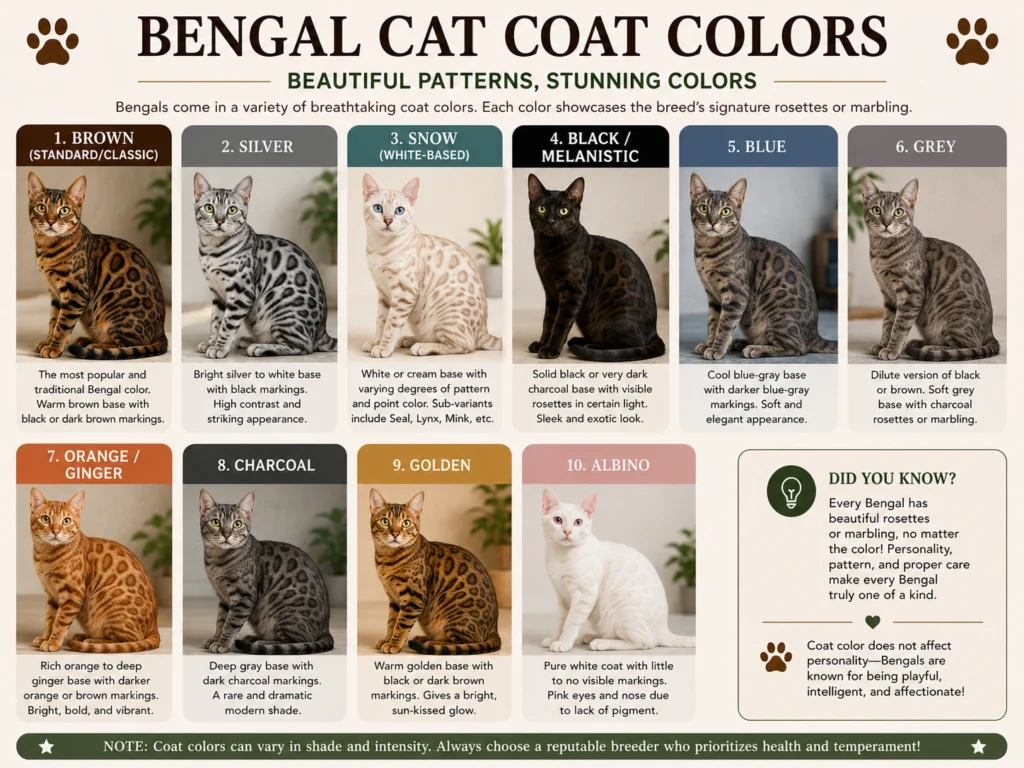
The Bengal’s coat is one of its biggest attractions.
Popular colours include:
- Silver Bengal cat with bright silver fur and black markings.
- Snow Bengal cat with cream or ivory colouring and soft markings.
- Black Bengal cat (Melanistic) with dark coats that hide subtle spots.
- White Bengal cat or snow white Bengal cat, which are usually snow-coloured Bengals rather than true albino cats.
- Orange, blue, charcoal, grey, and golden variations.
The terms gray Bengal cat and grey Bengal cat both describe dilute grey-coloured Bengals.
Bengal Cat Coat Patterns
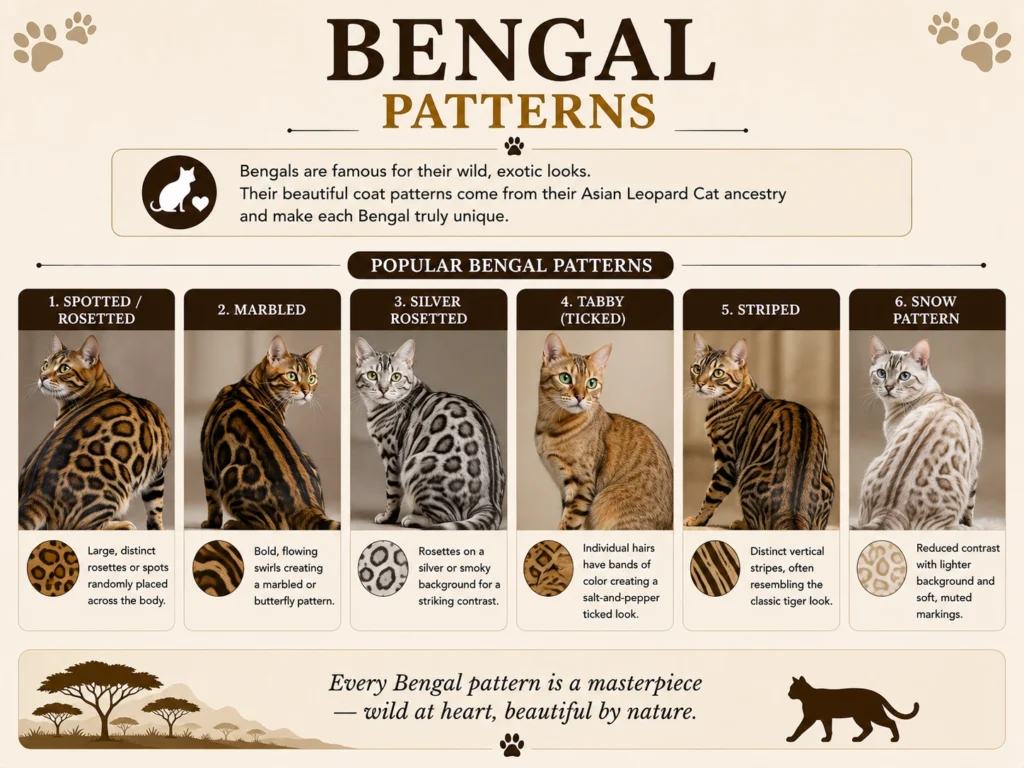
One of the biggest reasons people choose Bengal is its unique coat. While coat colours attract attention, the pattern is what gives the breed its wild appearance. Every Bengal has a different combination of markings, making each cat one of a kind.
The breed standard recognises two main pattern types—spotted (rosetted) and marbled—but several variations are commonly seen.
Spotted (Rosetted) Bengal
The spotted or rosetted pattern is the most famous. Instead of simple dots, these cats have rosettes that resemble the markings of a leopard or jaguar. Large, well-defined rosettes with a high-contrast coat are especially desirable.
Marbled Bengal Cat
A marble Bengal cat has flowing, swirling markings instead of individual spots. The pattern looks similar to marble stone, creating a dramatic and elegant appearance.
Tabby Bengal Cat
A tabby Bengal cat combines traditional tabby striping with Bengal features. They are less common than rosetted Bengals, but have a muscular body and energetic personality that the breed is known for.
Silver Rosetted Bengal
The silver Bengal cat has striking black rosettes against a bright silver background, creating one of the most eye-catching colour combinations.
Snow Pattern
A snow Bengal cat has lighter colouring with cream or ivory fur and soft brown markings. Many kittens are born with faint markings that become more visible as they mature.
Bengal Cat Lifespan
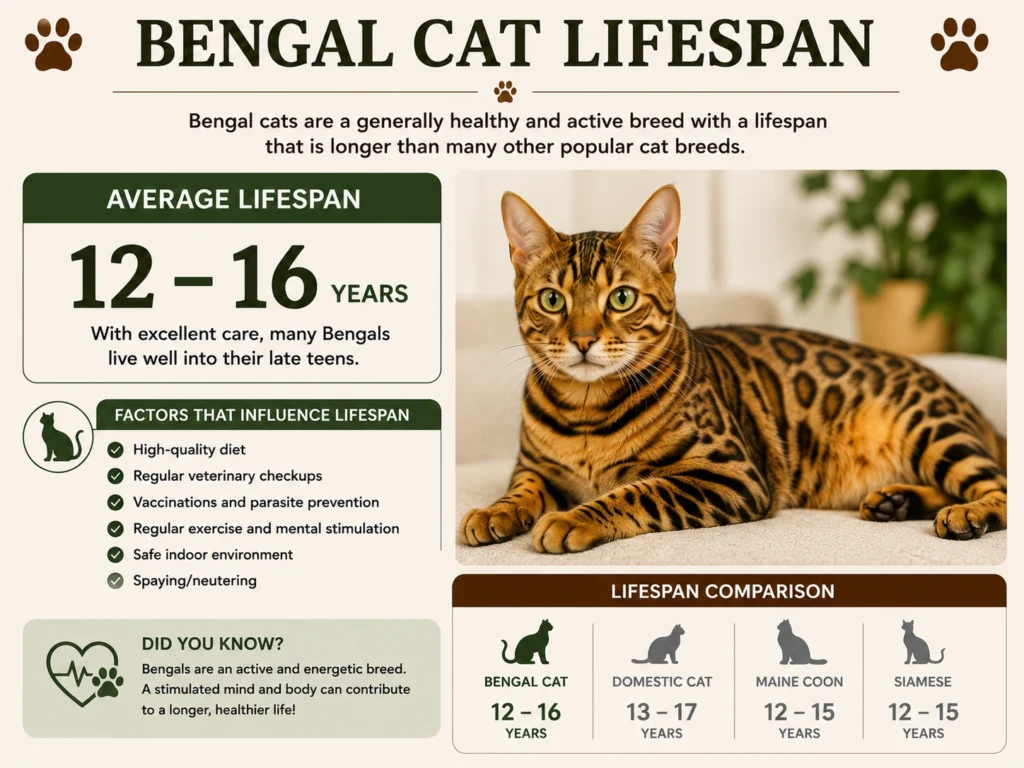
The Bengal cat lifespan is between 12 and 16 years, although many healthy Bengals live even longer with a lot of love and care.
Their long life depends on responsible breeding, a nutritious diet, regular veterinary care, exercise, and a safe indoor environment.
Bengal Cat Life Expectancy
The average Bengal cat life expectancy is:
- 12–16 years on average
- Some Bengals reach 17–18 years with excellent care
Factors that affect lifespan are:
- Good nutrition
- Regular vaccination is given
- Parasite prevention
- Daily exercise
- Mental stimulation
- Routine health check-ups
- Maintaining a healthy weight
Because Bengals are highly active, they benefit from climbing trees, scratching posts, puzzle feeders, and interactive play every day.
Are Bengal Cats Hypoallergenic?
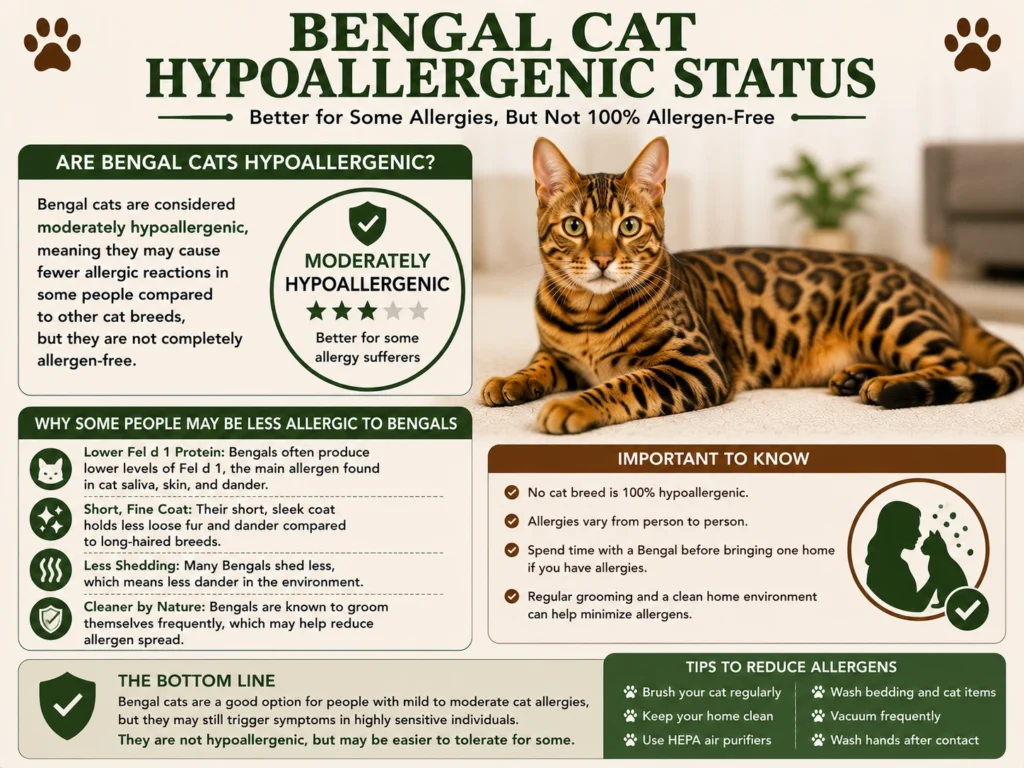
Many people wonder if Bengals are a good choice for allergy sufferers.
The answer is that Bengals are often considered moderately hypoallergenic, but no cat breed is completely allergy-free.
They usually produce slightly lower levels of the Fel d 1 protein, which is one of the main allergens found in cats
However, every person’s allergies are different. Spending time with a Bengal before bringing one home is always recommended.
Health and Common Medical Conditions
The Bengal is usually a healthy cat breed, but like other pedigree cats, it can be prone to some health problems.
Common health issues include:
- Progressive Retinal Atrophy
- Hypertrophic Cardiomyopathy
- Patellar Luxation
- Digestive problems
- Dental issues
Regular veterinary visits and preventive care are equally important throughout your Bengal’s life.
Exercise Needs
Bengals are highly active cats that need daily exercise and playtime. They enjoy staying busy and love activities that allow them to run, climb, and explore.
Good activities for Bengals include:
- Interactive toys
- Puzzle feeders
- Cat trees
- Climbing shelves
- Fetch games
- Safe outdoor walks with a harness
Without enough activity, a Bengal may become bored and develop unwanted behaviours such as excessive vocalisation or scratching furniture.
Grooming Requirements
Despite their beautiful coat, Bengals are easy to groom and maintain. Their short coat does not need heavy care, but regular grooming helps keep them healthy.
A simple grooming routine includes:
- Brushing once a week
- Trimming nails
- Cleaning ears
- Brushing teeth
- Providing scratching posts
Bengals usually keep themselves clean, so baths are needed when advised by a veterinarian
.
Diet and Nutrition
Bengals need a protein-rich diet for staying healthy. Always choose good quality cat food.
A balanced diet helps with:
- Strong muscles and bones
- Healthy weight
- Shiny coat
- Good energy levels
Avoid overfeeding to prevent weight gain.
Bengal Cat Price
The Bengal cat price depends on several factors like- the breeder, bloodline, coat quality, age, location, and purpose. Rare colours, show-quality Bengals, and cats from champion bloodlines may have a higher price.
If you are planning to buy a Bengal, always choose an ethical breeder who gives you health records, vaccinations, and proper socialisation for the kittens.
Average Bengal Cat Price Around the World
The cost of a Bengal cat varies depending on the breeder, location, pedigree, generation, coat quality, and health testing. Cats from registered breeders with proper documentation may cost more due to responsible breeding practices.
Factors that affect Bengal cat cost include:
- Breeder reputation
- Bloodline and pedigree
- Coat colour and markings
- Health checks and vaccinations
Bengal Cat Price in India
The Bengal cat price in India varies widely based on city, breeder, pedigree, and coat quality.
Look for:
- Vaccination records
- Health certificate
- Parent health history
Avoid unusually cheap kittens, as they may come from irresponsible breeding practices.
White Bengal Cat Price
The white Bengal cat is highly sought after because of its light cream or ivory coat and striking blue or aqua eyes. Most cats sold as white Bengals are actually snow Bengals.
The white Bengal cat price is usually higher than standard brown Bengals due to its popularity and selective breeding.
Similarly, the white Bengal cat cost depends on pedigree, colour quality, and breeder reputation.
Bengal Tiger Cat Price
Some breeders and pet lovers use the name Bengal tiger cat because of the breed’s bold striped or rosetted markings. It refers to the same domestic Bengal breed rather than a separate cat.
The Bengal tiger cat price generally falls within the same range as other Bengal cats.
Bengal Cat Kittens
Bengal kittens are playful, energetic, and incredibly curious. During their first year, they grow rapidly and require proper nutrition, early training, and regular veterinary care.
Look for Bengal cat kittens that are:
- Bright and alert
- Friendly
- Active without being overly aggressive
- Clean with clear eyes and ears
- Properly vaccinated and dewormed
- Raised in a clean home environment
Kittens should remain with their mother until they are at least 12 weeks old. This allows them to develop important social skills and confidence.
Bengal Cat for Sale: What to Check Before Buying
You may find many listings advertising a Bengal cat for sale, but not every seller follows responsible breeding practices.
Before making a purchase, ask the breeder:
- Can I meet the kitten’s parents?
- Have the kittens received vaccinations?
- Are health records available?
- Has the kitten been socialised?
- What food is the kitten currently eating?
- Is there a health guarantee?
Responsible breeders answer all your questions happily and encourage potential owners to learn about the breed before taking a kitten home.
Avoid purchasing from sellers who refuse to provide health information or who offer kittens at unusually low prices.
Bengal Cat Mixes
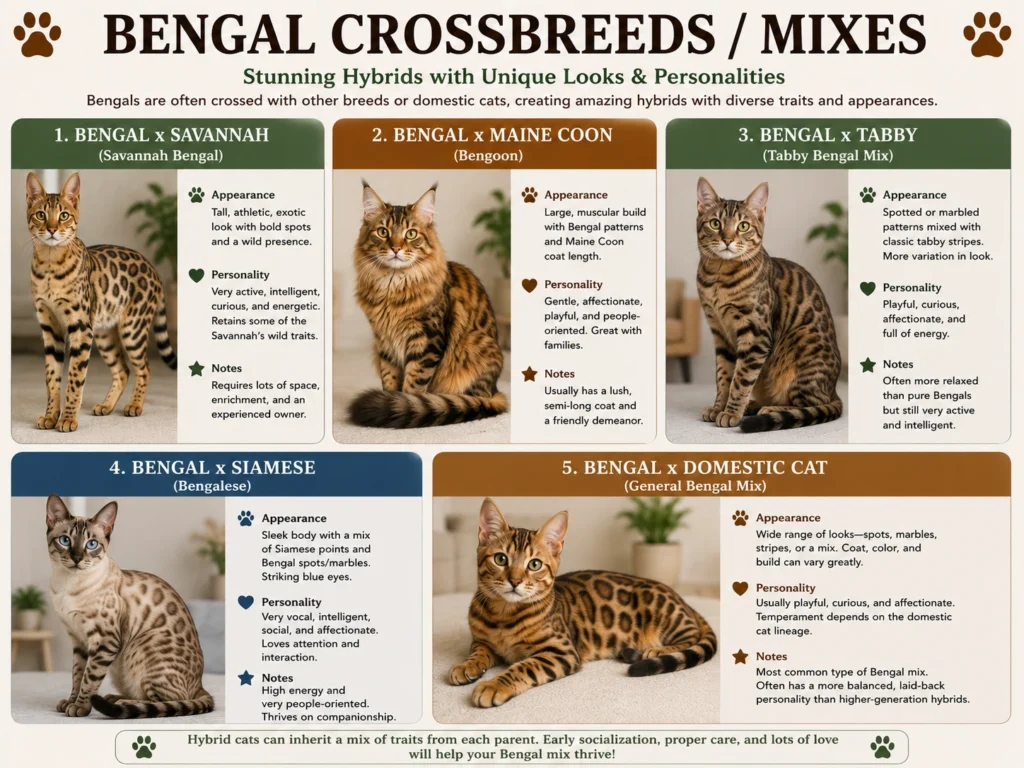
Although purebred Bengals are the most common, several Bengal mixes are also popular.
Bengal × Savannah
This hybrid combines two active breeds and is best suited to experienced owners with plenty of space and time for enrichment.
Bengal × Maine Coon
A Bengal crossed with a Maine Coon often results in a larger cat with a muscular body, semi-long coat that has a playful personality
Bengal × Tabby
A Bengal and tabby mix may inherit striped or spotted markings while keeping the Bengal’s energetic temperament.
Bengal × Siamese
These cats are intelligent, vocal, and highly social. They have a sleek body with blue eyes.
Bengal × Domestic Cat
A Bengal crossed with a domestic cat can have different coat patterns, including rosettes, marbling, or tabby markings. Its personality may vary, but many inherit Bengal’s playful and curious nature.
Male Bengal Cat Names
If you’re bringing home a male Bengal kitten, choosing the right name can be fun.
Popular male Bengal cat names include:
- Leo
- Simba
- Hunter
- Jasper
- Loki
- Tiger
- Shadow
- Milo
- Blaze
- Rocky
Select the name that matches your cat’s appearance and personality.
Living With a Bengal Cat
A Bengal is not just known for its looks; it is an intelligent and active cat that enjoys family interaction. Bengals love climbing, exploring, and playing, so they need regular mental and physical activities.
If they do not get enough play and attention, Bengals can get bored.
Bengals usually form strong bonds with their families and often follow their favourite person around the house. Many enjoy learning tricks, playing fetch, and even walking on a harness with proper training.
Are Bengal Cats Good Family Pets?
Yes, Bengals can be good family pets with proper love and care given to them.
They are a good choice for:
- Active families
- Children who handle cats gently
- Owners who can spend time playing with them regularly
Because of their high energy, they may not be the best choice for people looking for a quiet, low-maintenance lap cat.
Early socialisation helps Bengals become confident and well-adjusted adults.
Why Are Bengal Cats Illegal in Some Places?
One of the most searched questions is “Why are Bengal cats illegal?”
The answer depends on local laws rather than the breed itself.
Modern Bengals are fully domesticated, but because the breed was originally developed using the Bengal leopard cat, some countries, states, or local authorities have restrictions on early-generation hybrid cats.
Most Bengal cats today are several generations away from their wild ancestors and can be owned in many places. However, rules may differ by location, so check local laws before getting a Bengal.
Bengal Cat in India
Interest in the Bengal cat India market has grown rapidly over the past few years. Responsible breeders are available in several major cities, and many specialise in healthy, well-socialised kittens.
Before bringing a Bengal home in India, make sure you can provide:
- A spacious indoor environment
- Climbing structures and enrichment toys
- Regular veterinary care
- A high-quality diet
- Time for daily interaction and exercise
Choosing a reputable breeder is far more important than finding the lowest price.
Things to Know Before Bringing Home a Bengal
Owning a Bengal is rewarding, but it also comes with responsibilities.
Before adopting or buying one, consider the following:
- Bengals are highly active and need daily play.
- They enjoy climbing and benefit from tall cat trees.
- Mental stimulation is as important as doing physical exercise.
- They prefer interactive toys over being left alone for long periods.
- Regular health check-ups help them live long, healthy lives.
- Their short coat is easy to maintain and brush
If you are prepared to meet these needs, a Bengal can become a loyal and entertaining companion for many years.
FAQs
1. What is the average Bengal cat price?
The Bengal cat price depends on factors like- breeder, location, pedigree, and coat quality. Show-quality Bengals and rare colours may cost more than pet-quality cats.
2. How long does a Bengal cat live?
The Bengal cat life expectancy is around 12 to 16 years. Good food, regular vet care and love can help Bengals stay healthy and active for many years.
3. Are snow Bengal cats and white Bengal cats the same?
Most cats called a white Bengal cat are actually snow Bengal cats. They have cream or ivory coats with soft brown markings and often develop richer colour as they mature
.
4. How big does a full grown Bengal cat get?
A full grown Bengal cat typically weighs 3.5 to 7.5 kg and has a muscular, athletic build. Males are generally larger than females, but healthy weight depends on genetics, diet, and exercise.
5. Are Bengal cats good indoor pets?
Yes, Bengals can live happily indoors if they have enough space, toys, and places to climb. They are active cats and need daily play and activities to stay healthy and happy.
6. What is the difference between a Bengal cat and a Bengal tiger cat?
The term Bengal tiger cat is an informal name often used because of the breed’s bold markings. It refers to the same domestic Bengal cat rather than a separate breed.
Summary
The Bengal cat is one of the most remarkable domestic cat breeds, admired for its wild appearance, intelligence, and energetic personality. Developed from the Bengal leopard cat and domestic cats, the breed combines striking rosetted or marbled coats with an affectionate and playful nature.
Whether you are interested in a silver Bengal cat, snow Bengal cat, black Bengal cat, or a beautiful white Bengal cat, choosing a healthy kitten from a responsible breeder is the best way to start your journey. Understanding the Bengal cat history, Bengal cat origin, Bengal cat lifespan, grooming needs, diet, and exercise requirements will help you provide the care this active breed deserves.
The Bengal cat prices are maybe higher than other breeds but many owners value their beauty and intelligence.