
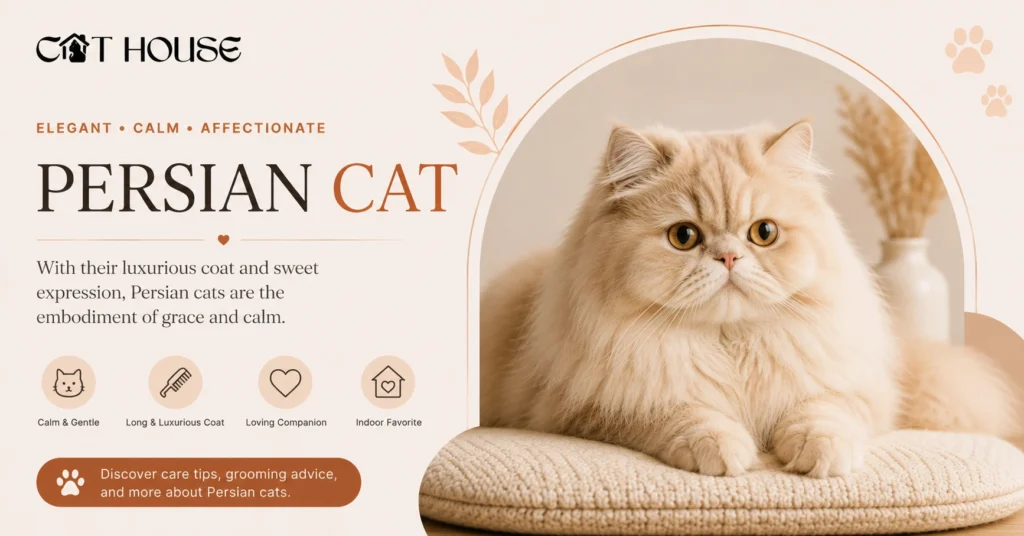
The Persian cat is one of the most elegant and recognizable cat breeds in the world. Known for its luxurious coat, calm personality, and adorable flat face, the Persian cat breed has been a favourite companion for centuries. Whether you love the classic long haired Persian cat, the modern flat face Persian cat, or the traditional doll face Persian cat, this breed is admired for its beauty and gentle nature.
Originally from Persia (modern-day Iran), the Persian cat is also known as the Shirazi cat, Iran cat, Irani cat, and Farshiyan cat.
If you’re thinking about bringing home a Persian cat kitten, this guide covers everything you need to know, including Persian cat personality, grooming, food, health, Persian cat lifespan and more.
Shop the collection

History and Origin of the Persian Cat
The Persian house cat is one of the oldest and most admired cat breeds. Historians believe that long-haired cats arrived in Europe from Persia during the 1600s.
Over many years, selective breeding created the modern Persian cat breed that we know today. Some breeders preferred the flat face Persian, also called the peke face Persian, while others continued to develop the traditional Persian or doll face Persian, which has a longer nose and a more natural appearance.
Persian Cat Appearance
The Persian cat is admired for its soft coat, round features, and graceful look.
Main characteristics include:
- Thick, long double coat
- Large round eyes
- Small rounded ears
- Short but muscular body
- Broad chest
- Short legs
- Large fluffy tail
Many people recognise Persians as cats with smushed faces, although not every Persian has an extremely flat face.
The breed comes in two main facial styles:
- Flat face Persian cat (Peke Face Persian) – very short nose and flatter skull.
- Doll face Persian cat (Traditional Persian) – longer nose with a more natural facial structure.
Persian Cat Size, Weight and Growth
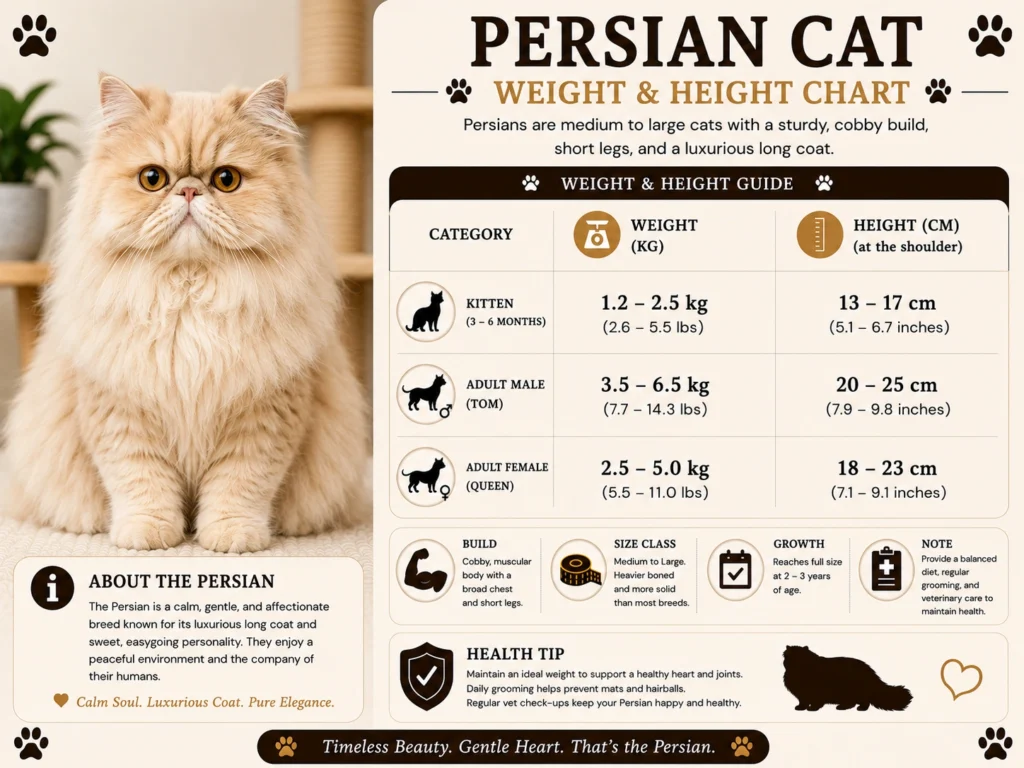
The Persian cat breed is medium to large with a sturdy body, thick bones, and a dense coat that makes them appear even bigger.
Average Weight
- Adult Male: 3.5–6.5 kg (7.7–14.3 lbs)
- Adult Female: 2.5–5 kg (5.5–11 lbs)
Average Height
- Adult Male: 20–25 cm
- Adult Female: 18–23 cm
Kitten Growth
A Persian kitten grows more slowly than many other breeds.
Typical growth:
- 2–6 months: 1.2–2.5 kg
- Around 1 year: Nearly full height
- 18–24 months: Full body development and mature coat
Persian cats have a strong, sturdy body with heavy bones, giving them a solid build.
Persian Cat Personality
One reason the Persian cat breed remains so popular is its loving and peaceful nature.
The typical Persian cat personality includes:
- Gentle and affectionate
- Quiet around the home
- Loyal to family
- Patient with children
- Friendly with calm pets
Persian cats prefer a quiet home. They enjoy relaxing with their owners in a comfortable Persian cat bed, and watching the outdoors from a window. While Persian kittens are playful, adult Persians are calm, affectionate, and ideal for families, seniors, and apartment living.
Persian Cat Coat Colours
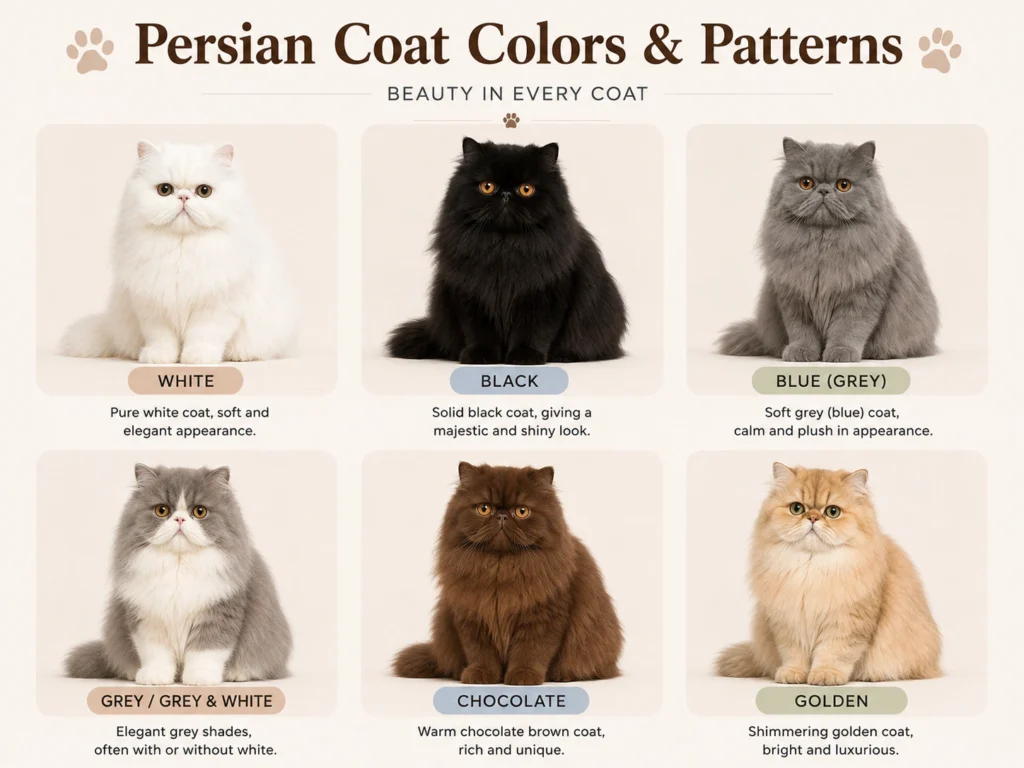
One of the biggest reasons people fall in love with the Persian cat is its beautiful coat.
White Persian Cat
The white Persian cat has a soft white coat and a beautiful, elegant appearance. Some have blue, copper, or odd-coloured eyes, making them especially eye-catching.
Black Persian Cat
The black Persian cat has a rich black coat with bright copper or golden eyes. Its glossy fur gives it a striking look.
Blue (Grey) Persian Cat
The blue Persian cat has a soft grey coat with a bluish tint. It is also commonly called the grey Persian cat or gray Persian cat.
Grey & White Persian Cat
The white and grey Persian cat combines a white coat with soft grey patches. This colour pattern gives the cat a gentle and elegant appearance.
Chocolate Persian Cat
The chocolate Persian cat has a warm brown coat that is less common than other colours. Its rich colouring makes it stand out.
Golden Persian Cat
The golden Persian cat has a shimmering golden coat with warm tones. Its fluffy fur and bright eyes make it one of the most attractive Persian colours.
Persian Cat Coat Patterns
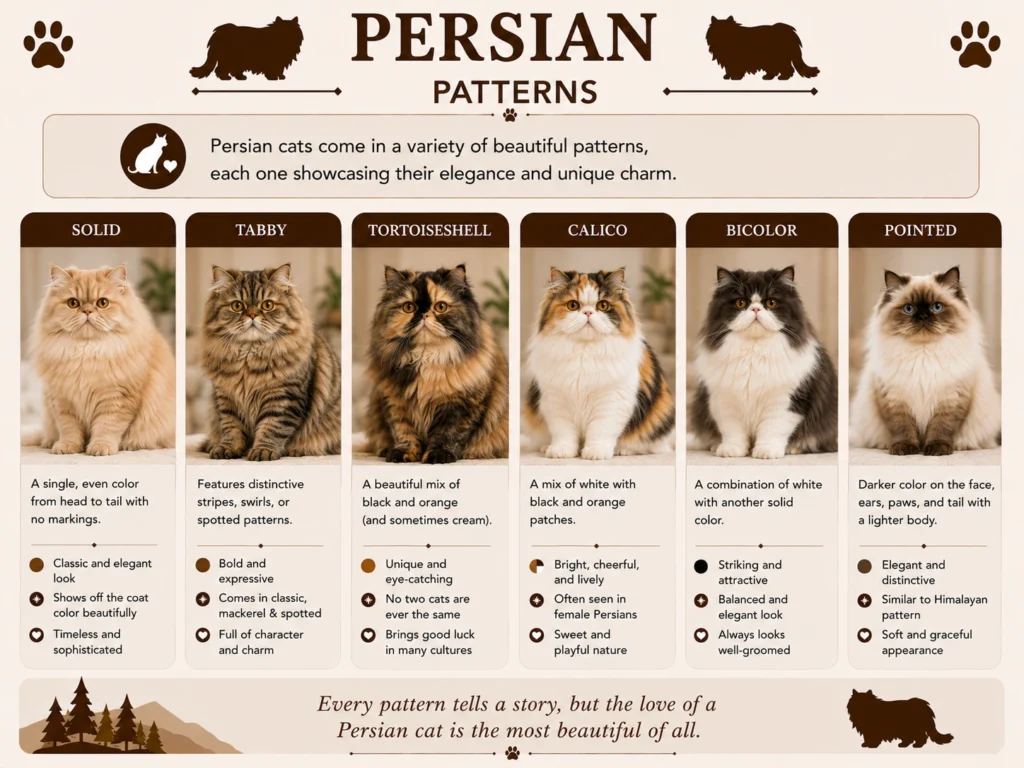
Besides solid colours, Persian cats are available in many beautiful coat patterns. These patterns give every cat its own unique appearance.
Solid Persian
A Solid Persian has one coat colour from head to tail. Common colours include white, black, blue, chocolate, cream, and red.
Tabby Persian Cat
The tabby Persian cat has stripes, swirls, or spotted markings. Brown, silver, blue, and red tabbies are the most common.
Tortoiseshell Persian Cat
The tortoiseshell Persian cat has a mix of black, orange, cream, or chocolate patches, giving each cat a unique look.
Calico Persian Cat
The calico Persian cat has white, black, and orange patches. This colourful pattern is most often seen in female cats.
Bicolor Persian
A black and white Persian cat and a white and grey Persian cat are popular bicolor Persian varieties with two distinct coat colours.
Pointed Persian
A Pointed Persian has a light body with darker ears, face, legs, and tail. This pattern is commonly seen in the Himalayan Persian cat.
Types of Persian Cats
Although all Persians belong to the same breed, several popular varieties have developed over time.
Doll Face Persian
The doll face Persian has a longer nose and a more natural facial structure. It is often preferred because it may have fewer breathing and eye issues.
Flat Face Persian
The flat face Persian, also called the peke face Persian or punch face Persian cat, has a very short nose and the classic flat face seen in many show Persians.
Traditional Persian
The traditional Persian closely resembles the original Persian cats, with a less flat face and the same long, luxurious coat.
Chinchilla Persian
The Chinchilla Persian is known for its silver or golden coat and bright green eyes, giving it a graceful appearance.
Himalayan Persian Cat
The Himalayan Persian cat has the Persian’s long coat with darker colour points on the face, ears, legs, and tail.
Exotic Persian Cat
The Exotic Persian cat, also called the Exotic Shorthair Persian cat, has the Persian’s appearance with a short, plush coat that needs less grooming. The long-haired version is known as the Exotic Longhair Persian.
Teacup Persian Cat
The teacup Persian cat is a smaller version marketed by some breeders. It is not an officially recognised breed, so buyers should choose breeders carefully.
Persian Cat Mixes and Crossbreeds
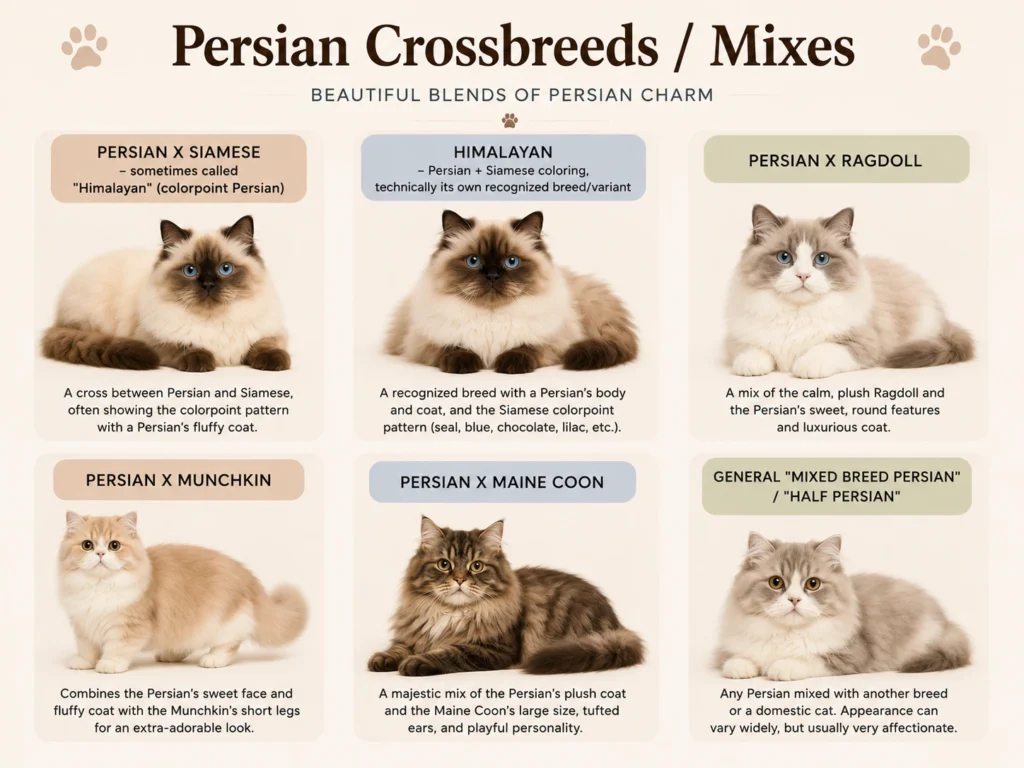
The purebred Persian cat is popular, but several Persian crossbreeds have also been developed. These mixes combine the Persian’s gentle nature with traits from other breeds.
Some popular examples include:
Persian x Siamese
The Persian x Siamese cat has the Persian’s long, fluffy coat and the Siamese’s beautiful colour-point pattern. They have friendly and gentle personalities of both breeds.
Himalayan (Persian x Siamese)
The Himalayan cat is a Persian and Siamese mix known for its Persian-like body, long coat, and Siamese colour-point markings. It is a recognised breed with a calm and gentle nature.
Persian x Ragdoll
The Persian Ragdoll cat combines the Ragdoll’s relaxed personality with the Persian’s soft, luxurious coat. This mix is usually loving, calm, and enjoys human companionship.
Persian x Munchkin
The Persian x Munchkin cat has the Persian’s long, fluffy coat and the Munchkin’s short legs.This mix is a small cat with a combined unique appearance.
Persian x Maine Coon
The Maine Coon Persian cat combines the Persian’s thick coat with the Maine Coon’s large size and sturdy build. This mix can be fluffy, friendly, and playful.
Mixed Breed Persian / Half Persian
A mixed Persian cat, mixed breed Persian cat, or half Persian cat is a Persian crossed with another breed. Their appearance and coat type depend on the mixed breed.
Persian Cat Grooming
The beautiful coat of a Persian cat is its most attractive feature, but it also needs regular care. Proper Persian cat grooming keeps the coat soft, prevents painful mats, and helps reduce loose hair around your home.
Unlike short-haired breeds, a long haired Persian cat should be brushed every day. Skipping grooming for several days can lead to tangles that are difficult to remove.
A consistent best Persian cat grooming schedule includes:
- Brush the coat daily.
- Comb behind the ears, under the legs, and around the tail where knots often form.
- Wipe the eyes every day to remove tear stains.
- Trim the nails every 2–4 weeks.
- Clean the ears once a week.
- Bathe every 4–6 weeks using a cat-safe shampoo.
Persian Cat Grooming Tools
The right Persian cat grooming tools make grooming easier. Essential tools include:
- Wide-tooth comb
- Brush
- Dematting comb
- Nail clippers
- Cat-safe shampoo
- Eye cleaning pads
Starting grooming when your Persian kitten is young helps it get used to regular care.
Persian Cat Food and Nutrition
A balanced diet helps keep your Persian cat healthy.
Look for food that includes:
- Good-quality animal protein
- Healthy fats
- Taurine
- Omega-3 and Omega-6 fatty acids
- Essential vitamins and minerals
- Hairball and digestion support for long-haired cats
Feeding Guide
Persian Kitten (2–12 Months)
- Feed 3–4 small portion meals.
- Give kitten food for healthy growth.
Adult Persian Cat
- Feed 2 measured meals daily.
- Limit treats and provide fresh water.
Senior Persian Cat
- Give food that gives joint support, easy-to-digest protein, and fewer calories.
Exercise and Daily Care
Although Persian cats enjoy relaxing, they still need daily activity to stay healthy.
Simple ways to keep your cat active include:
- Short play sessions with feather toys
- Puzzle feeders
- Climbing trees or shelves
- Scratching posts
- Interactive toys
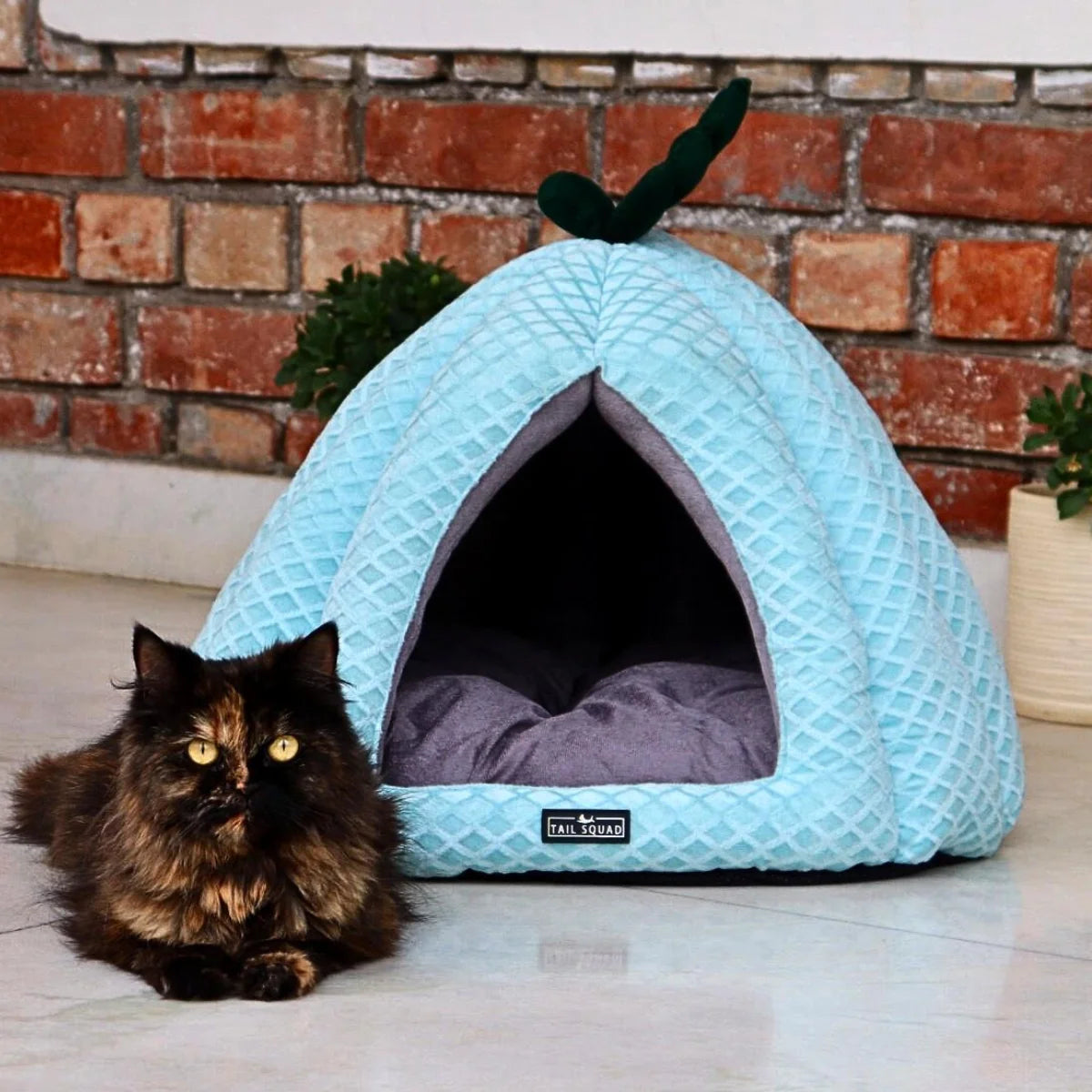
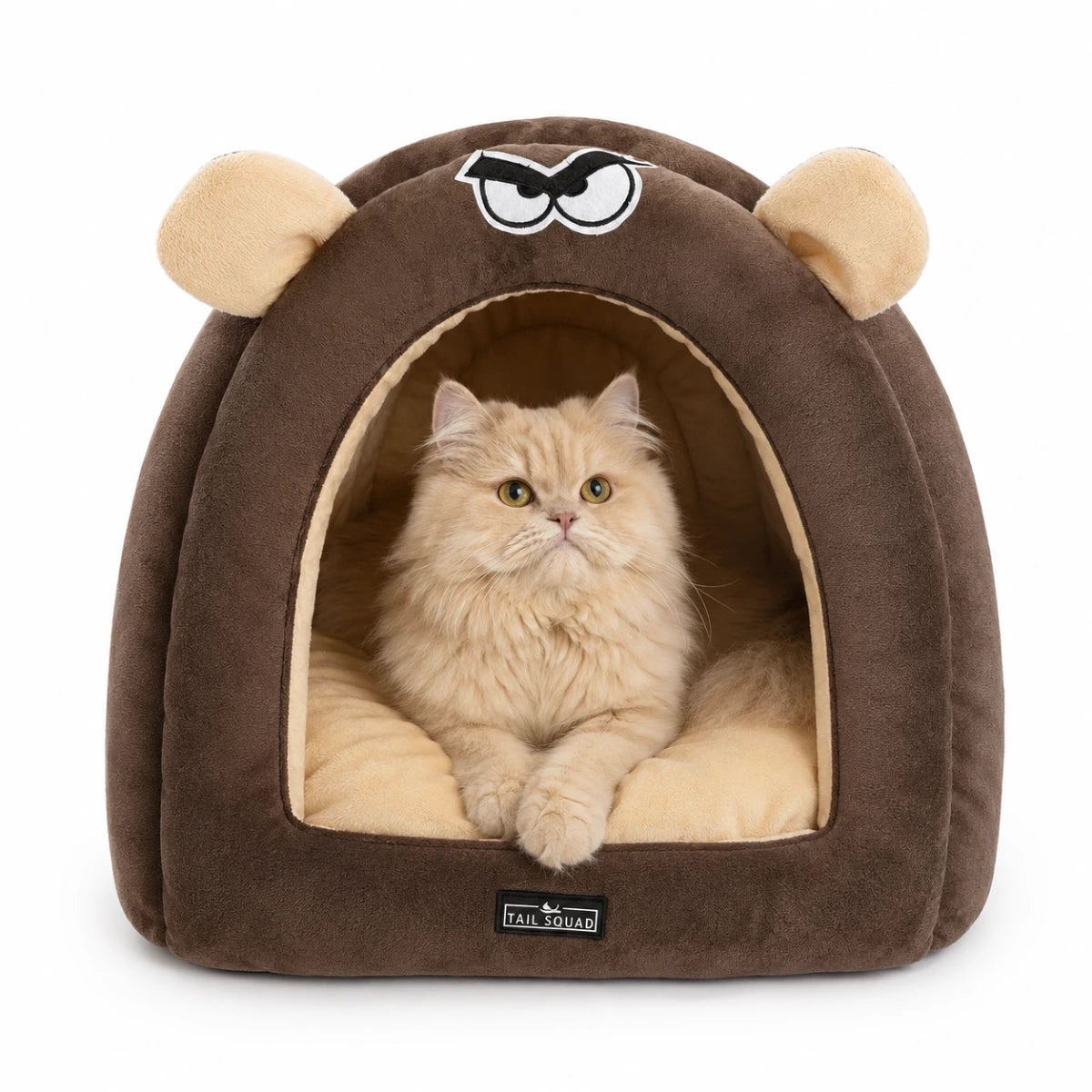
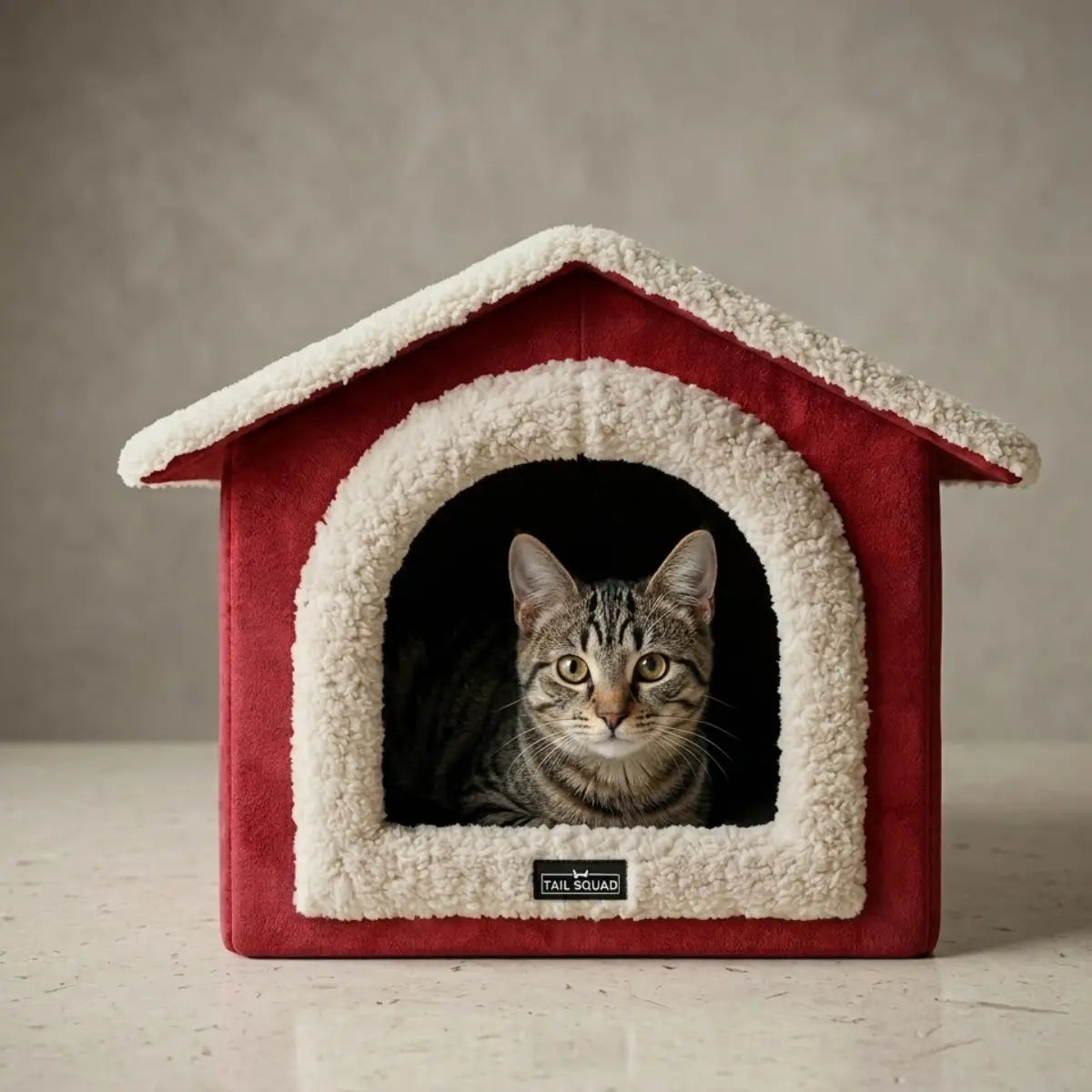
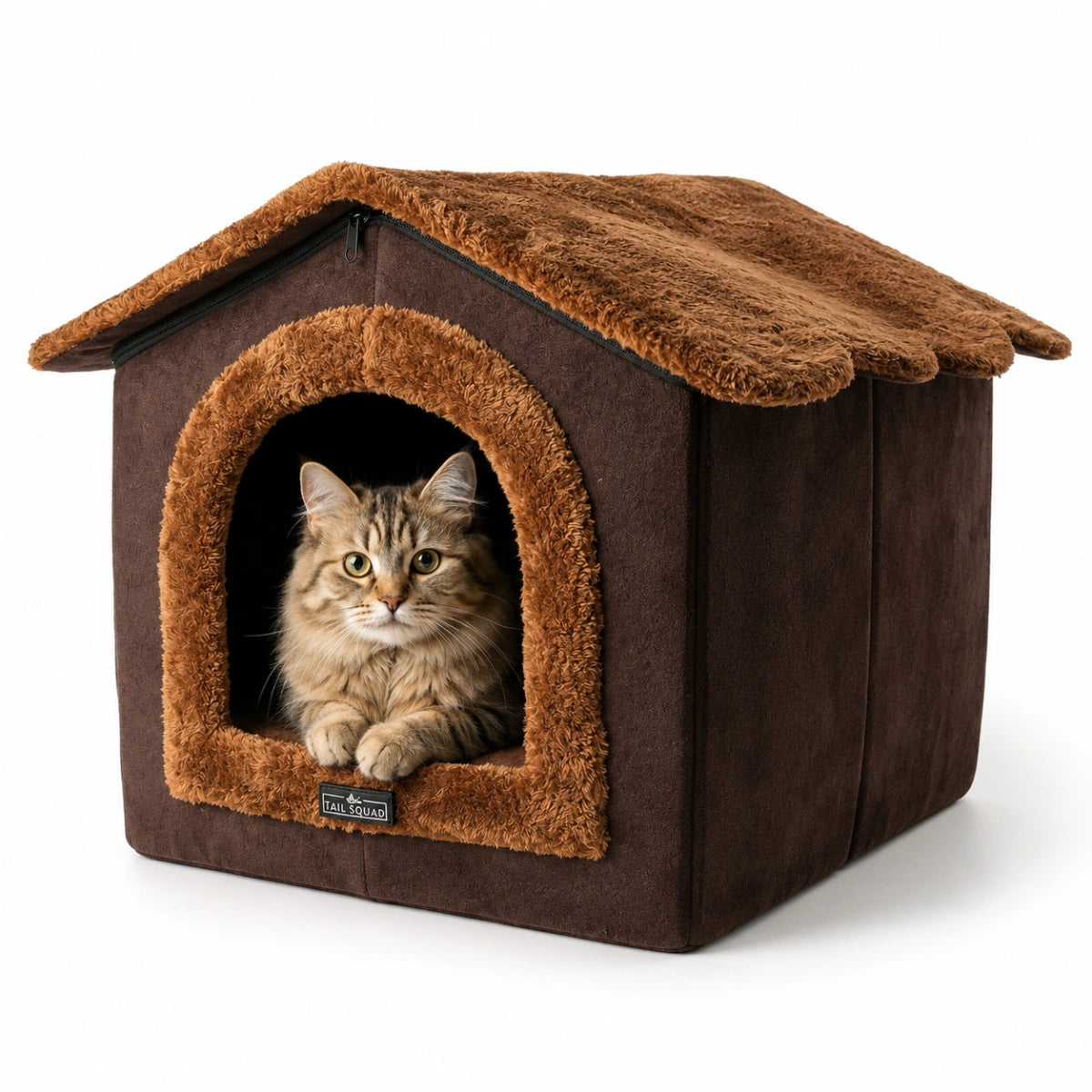
Persians enjoy relaxing close to their owners. A soft Persian cat bed or a comfortable Persian cat house gives them a quiet, safe place to rest.
Common Health Problems
Persian cats can have some common health problems, such as:
- PKD: An inherited kidney disease.
- Breathing Problems: More common in flat face Persian cats.
- Eye Problems: Tear stains and eye infections.
- Dental Problems: Regular cleaning is needed.
- Hairballs: Long hair can cause frequent hairballs.
- Weight Gain: Too much food and little activity can lead to obesity.
Regular vet visits, good food, and grooming help keep Persian cats healthy.
Persian Cat Lifespan
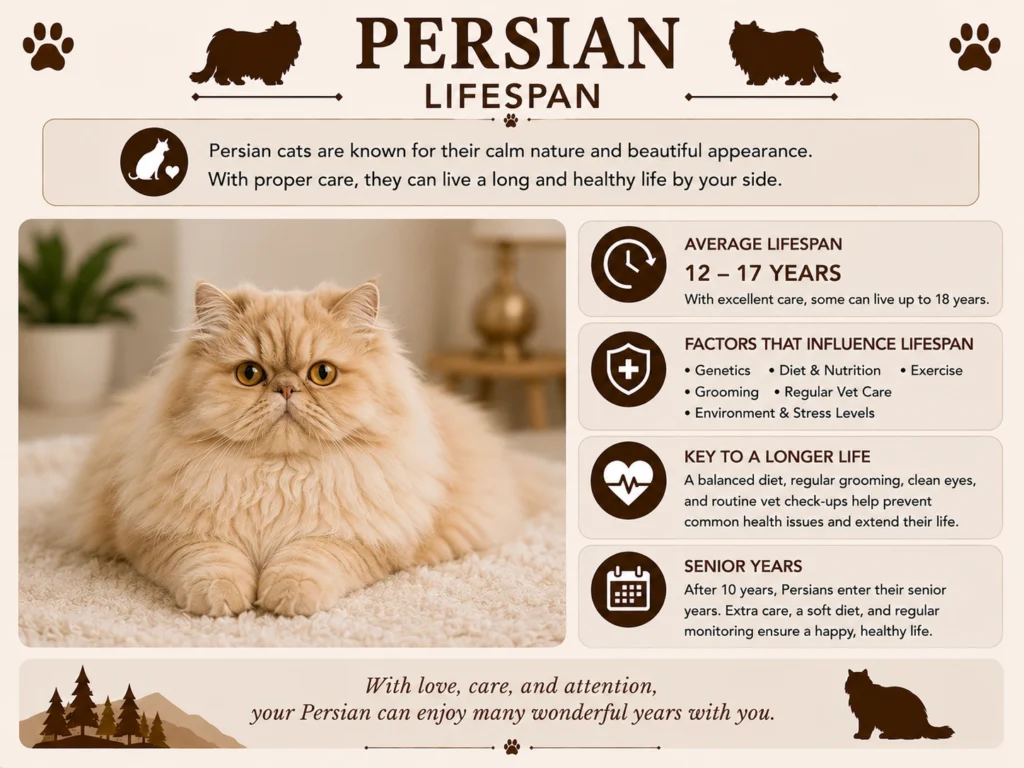
The average Persian cat lifespan is 12 to 17 years, although some healthy cats live even longer with excellent care.
Many owners searching for Persian cat life expectancy, Persian cat average life, Persian cat age expectancy, Persian cat longevity, cat lifespan Persian, or how long do Persian cats live will find that genetics, nutrition, grooming, and regular veterinary care all play important roles.
Factors That Affect Life Expectancy
Several factors affect Persian cat’s life expectancy, including:
- Good genetics
- Healthy diet
- Healthy weight
- Regular grooming
- Vet check-ups
- Indoor living
- Dental care
Helping Your Persian Live Longer
Help your Persian cat stay healthy by:
- Feeding good-quality food
- Brushing regularly
- Keeping vaccinations up to date
- Taking your cat to the vet regularly
- Keeping your cat indoors
With proper care, your Persian house cat can remain a loving companion for many years.
Are Persian Cats Hypoallergenic?
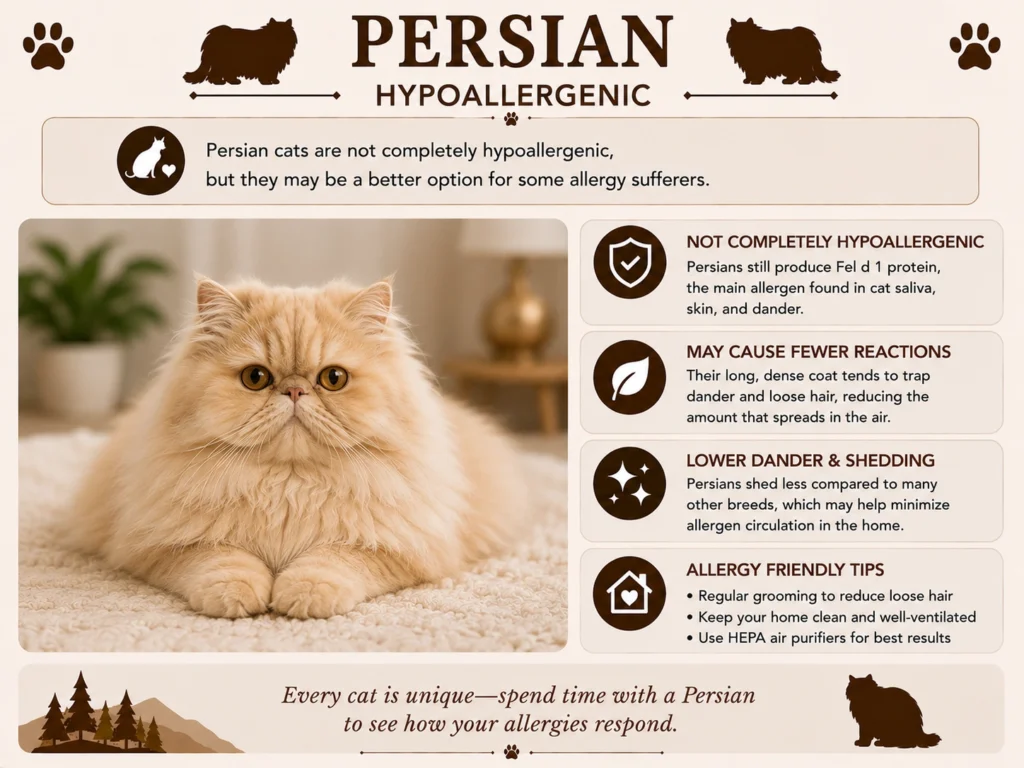
Many people believe Persian cats are hypoallergenic because of their long coat, but that’s not true. They produce the same allergy-causing protein as other cats, although proper grooming and home hygiene can help limit loose hair and dander.
Persian Cat Price and Buying Guide
The Persian cat price depends on its age, colour, bloodline, breeder, and location.
- Pet Persian cats usually cost less.
- Show Persian cats cost more.
- Rare colours and blue-eyed Persian cats are often more expensive.
Besides the Persian cat price, you should also budget for:
- Cat food
- Grooming supplies
- Vet visits and vaccinations
- Cat bed and carrier
- Toys and scratching post
A Persian cat needs regular care and is a long-term commitment.
Finding Persian Cat Breeders
Choose Persian cat breeders who:
- Health test their cats
- Keep kittens in a clean home
- Provide health records
- Raise kittens with their mother
Avoid breeders who cannot provide health records.
Persian Cats for Sale and Adoption
You can find Persian cats for sale and Persian kittens for sale from responsible breeders. If you prefer to adopt, many shelters and rescue groups also have Persian cats for adoption and adult Persian cats looking for new homes.
Adoption gives a cat a loving home while helping pets in need.
Is a Persian Cat Right for You?
A Persian cat is the best choice if you:
- Want a calm and gentle cat
- Can groom your cat regularly
- Prefer an indoor cat
- Have a quiet home
A Persian may not be the best choice if you:
- Want a very active cat
- Don’t have time for grooming
- Prefer a low-maintenance pet
FAQs
1. How much is a Persian cat?
The Persian cat price depends on the breeder, age, bloodline, colour, and location.
2. Are Persian cats hypoallergenic?
No. Persian cats are not hypoallergenic.
3. How long do Persian cats live?
A Persian cat usually lives 12–17 years with good care.
4. How often should I groom a Persian cat?
Brush your Persian cat every day and bathe it every 4–6 weeks.
5. What is the difference between a doll face and a flat face Persian?
A doll face Persian has a longer nose, while a flat face Persian has a shorter, flatter nose.
6. Where can I find Persian kittens?
You can find Persian kittens from responsible breeders or adopt them from shelters and rescue groups.
Conclusion
The Persian cat is a gentle, loving, and beautiful breed that makes a great indoor companion. With regular grooming, good food, and routine vet care, your Persian can live a happy and healthy life.
If you’re looking for Persian kittens, checking the Persian cat price, or choosing Persian cat breeders, always choose a healthy, well-socialised cat.